A review of MAMMA’S MOON

An affecting novel that richly captures the inimitable spirit of Louisiana. —Kirkus Reviews

In two intersecting tales set in Louisiana, an elderly black veteran kills his attacker and faces a murder trial while his Cajun French best friend tries to discover the truth about the mother he never knew. 

Gabriel Jordan, an “aging army captain” and “veteran of Korea and Vietnam,” is threatened by a young white man, Kenneth Bauer, at a Walmart in New Orleans, and as a result buys a cane for a future act of self-defense. Later, Kenneth hunts the vet down and threatens him with a knife, and Gabe beats him to death with that cane. He’s arrested for second-degree murder, a charge that could stick, especially because the knife is nowhere to be found. And Gabe, despite his advanced age, is known to be an “experienced, highly trained, battle-savvy army captain.” Gabe is less haunted by the prospect of prison time than he is by the enormity of what’s he done, a poignant moral nuance characteristic of this thoughtful drama: “Let me work it out in my mind….I’m an old man. I need to make it right in my head and with God.” Meanwhile, his best friend, Boudreau Clemont “Peck” Finch—who overcomes illiteracy and gets accepted into college in under a year’s time—decides he needs to track down his real mother, a woman who remains a mystery to him. But as his relationship with his girlfriend, Millie, becomes ever more serious, he worries that she won’t be able to accept his inauspicious beginnings. He travels to the Louisiana swamps that he fled when he was only 9 years old, the victim of morbidly dark abuse. Antil’s (One More Last Dance, 2017, etc.) touching sequel draws heavily from the plot established in the first novel, but remains an “entirely self-contained story.” The author palpably re-creates the electrifying energy of New Orleans, a combination of old-world merriment and lurking danger (“The velvet sax was an offer of promise and calm for the old man, jazz aficionado, dancer, and troubled soul”). Further, Peck is a memorable character—surprisingly deep and boyishly innocent simultaneously, he provides both comic levity and some of the book’s most moving moments. An affecting novel that richly captures the inimitable spirit of Louisiana. 

Kirkus Reviews, MAY 7, 2019

A review of PECK FINCH AND THE HANGED MAN

A darkly thrilling literary exploration of the scourge of sex trafficking. Kirkus Reviews

A young man stumbles upon a sex-trafficking ring in New Orleans and attempts to save one of its victims.

Boudreaux Clemont Finch—everyone calls him Peck— is a man of beguiling contradictions: Once “an illiterate Cajun French lawn-mowing hunk,” he is now in night school in Tulane, while he works at a law office run by his boss and sometime lover, Lily Cup. Despite his unprepossessing manner, he has a remarkably lively, observant mind. One night, he witnesses a young girl—he estimates she’s 13—abducted at gunpoint, pulled into a black Mercedes, and beaten. He suspects and later confirms with his own investigation that the girl has been forced into sex slavery. He learns her name—at least the one she is forced to adopt—is Tiffany. With the help of his friends, including Lily Cup, he decides to liberate Tiffany and “bust up” the trafficking ring, a terrifyingly dangerous mission. Meanwhile, Peck wrestles with his own traumatic childhood, one marked by unspeakable abuse at the hands of a man, Guillaume Devine, who raped his mother. Antil paints a sparkling tableau of life in New Orleans, one also sullied by a nefarious underbelly. He movingly creates a melancholic atmosphere where he can explore the “sadness in the world,” as Peck’s friend Gabe puts it. Better than most, Peck comprehends the way evil wreaks havoc in New Orleans, and he succinctly summarizes it to Lily Cup: “Bein’ rich ain’t a bad thing cher, but it’s the bad rich people looking for poor people that’s bad. It’s street-smart people looking for street stupid people.” The book unfortunately concludes on an incongruent note of false sentimentality—a neat denouement that “touched everyone’s heart.” However, this remains a thoughtful story and Peck a memorable protagonist.

A darkly thrilling literary exploration of the scourge of sex trafficking.

Kirkus Reviews, May 25, 2022

A review of HEMINGWAY, THREE ANGELS, AND ME

A complex coming-of-age story that evokes the enduring effects of war and the latter days of the Jim Crow system.Kirkus Reviews

A boy learns important lessons about prejudice, racism, and courage in post-World War II America in a fictional tale that combines autobiographical elements and the supernatural.

The fourth book in Antil’s (Mary Crane, 2015, etc.) Pompey Hollow Book Club series finds Jerry in 1953, 13 years old and finally settled into the rural community of Delphi Falls, where his family moved four years earlier. Jerry’s father, Big Mike, who owns the town bakery, is disturbed by the ugly signs of prejudice he sees in his upstate New York town. He’s especially worried when Jerry, his brother, Dick, and their mother travel to segregated Little Rock, Arkansas, to help Jerry’s aunt Mary with the birth of her baby. Although WWII ended eight years earlier, it looms large in the narrative, just as it does in the lives of the children who grew up during the early 1940s and the adults still feeling the war’s repercussions. In Little Rock, Jerry learns of numerous injustices, large and small, that arise from racial prejudice, from separate water fountains to discrimination in the military. His guardian angel, Charlie, who first appeared in the second volume of the series, The Book of Charlie (2013), calls Jerry into action to help Anna Kristina, a pregnant African-American girl who’s in danger from the prominent white man who raped her. With the aid of Charlie, two other angels, and a host of other supporters, including Jerry’s war hero uncle and the author Ernest Hemingway, Jerry strives to rescue Anna Kristina and even has a thrilling ride in a B-25 bomber. Antil covers important thematic ground in a narrative in which cooperation and understanding counter segregation, and most of the white characters are as deeply concerned about racism as the characters of color are. As this version of “Papa” Hemingway says, “Racism isn’t about color, Jerry, it’s about…not wanting to know about or care about other cultures.” Some of the book’s explanations are simplistic, and there are occasional anachronisms (such as when a Little Rock churchgoer refers to the rapist who fathered Anna Kristina’s child as a “baby daddy”). But overall, there’s much positive food for thought here, couched in an engaging adventure tale.

A complex coming-of-age story that evokes the enduring effects of war and the latter days of the Jim Crow system.

Kirkus Reviews, Oct. 1, 2016

A review of THE BOOK OF CHARLEY

A beautiful balance of action and warmth.
Kirkus Reviews

Raucous adventure abounds in Antil’s (The Long Stem Is in the Lobby, 2013 etc.) heartfelt coming-of-age novel set in upstate New York during the 1950s.

Fans of Antil’s The Pompey Hollow Book Club (2011) will be eager to learn more about the misadventures of their favorite club members in this colorful follow-up novel. It’s the summer before their freshman year of high school, a time when they begin to leave childhood behind but are nonetheless itching for adventure as much as ever. The story is told from the perspective of ghostly Ole Charlie, a kindly neighbor who has passed and is now the group’s guardian angel. Fast-paced and action-packed, the novel follows young Jerry and his friends as they get their first jobs, rescue orphans and down-on-their-luck polio victims, and plan their biggest caper yet to catch a pair of criminals. Though the intrigue surrounding the two escaped criminals and the subsequent plan to flush them out are what pushes the novel forward, its heartbeat lies in the quiet moments that reveal the character of this close-knit community. Following World War II, which forever changed their lives, these communities have emerged stronger than ever. The people work together, care for each other’s kids, rally behind perfect strangers with abounding kindness and believe in the basic good in each person. As the kids of the surrounding communities all come together to protect their towns, a beautiful sense of brotherhood emerges; it’s an uplifting examination of what community really means. History buffs will also appreciate the many referencesto WWII, Gen. Eisenhower and decoy missions in England before D-day. Not without its faults, the novel is sometimes difficult to read. Readers will appreciate the unique language of the time period, but some sentences, especially in opening chapters, are unusually long and need to be read several times for clarity. Nevertheless, it’s a delightful read.

A beautiful balance of action and warmth.

Kirkus Reviews, March 27, 2014

A review of THE POMPEY HOLLOW BOOK CLUB

A heartfelt story about growing up in the shadow of World War II.” —Kirkus Reviews

A group of kids in rural upstate New York have a series of adventures in the years following World War II.

Young Jerry Antil has always been a city boy, so when he and his family—including his mother, his baker father Big Mike and his brothers Mike and Dick—move from the town of Cortland, N.Y., to the country in 1948, he knew he’d have to make some adjustments. Luckily Jerry, like others who grew up during World War II, is a resourceful kid who knows how to make the best of any situation. And thanks to his father, Jerry knows that if you pay attention there’s plenty of adventure to be had no matter where you are. He and a group of likeminded kids form the Pompey Hollow Book Club, and before long they are finding excitement everywhere, whether they’re looking for a group of thieves who have been breaking into local businesses or trying to save a gaggle of innocent poultry from a grisly end on the Thanksgiving table. Although structured as a series of discrete stories, the flow of the narrative feels more like a novel than a collection of short stories. The characters are well developed—especially the kids—and the prose is plain but competent. The humor is more goofy than witty, but it will be a hard-hearted reader who won’t chuckle at least once. The novel occasionally comes across as a little saccharine, but it feels honest and heartfelt all the same. The most affecting passages describe Jerry’s relationship with his extraordinary father, who instills in him a strong sense of decency, as well as a love for adventure. The author makes a compelling point by stressing the idea that growing up in wartime had a profound effect on the outlook and attitudes of the children, among other things allowing them to make the most of any situation.  

A heartfelt story about growing up in the shadow of World War II.

Kirkus Reviews, Dec. 7, 2011

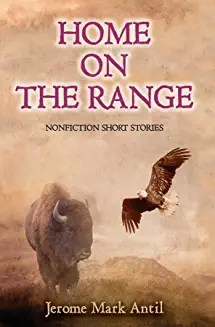
A review of HOME ON THE RANGE

HOME ON THE RANGE
(A LOVE STORY) AND THREE OTHER TRUE SHORT STORIES

Jerome Mark Antil
Little York Books (Feb 15, 2017)
Softcover $14.95 (130pp)
978-0-9971802-4-4

The settings in these stories are charmingly imagined; they delight even as they entertain.

With these four true short stories, Jerome Mark Antil offers delightful and often emotionally compelling scenes from his interesting life. From his childhood in 1950s New York to his later writing career in Texas, Antil shares his genuine enjoyment of a life well lived.

The title story, the longest of the bunch, follows Antil’s love affair with model Pamela Berkin. They first met at a mutual friend’s wedding, and it was love at first sight. However, they crossed paths only a few times over the next forty years until they began exchanging letters to each other across the country and rekindled their relationship.

Versions of a love story like theirs have been retold many times over, but the theme of true love that transcends time continues to appeal. Antil does name-drop often in this story—Pamela was a well-known model, after all—but he remains modest throughout. He admits his faults (spending years paying back the IRS for business mistakes), and his admiration for Pamela is contagious. His humility and obvious love for his wife make the tale most enjoyable to read.

The three other pieces delve into Antil’s childhood. “Richard Leaves the Choir Breathless” and “Postwar Shortages and Shortfalls” are both humorous anecdotes in which his brother and mother respectively commit unexpectedly hilarious acts. Both are entertaining, and they share details of the era that add to the atmosphere of the book as a whole.

“A Cazenovia Christmas Past,” the last tale, marks a change in tone, as Antil, his mother, and his seven siblings deal with his father’s tuberculosis diagnosis. In the fifties, this could have been a death sentence, and its occurrence at Christmastime makes the stress all the more tragic.

The pacing of all four stories—the first in particular—is nearly perfect, with the ebb and flow of action urging continued reading. All settings in the book are charmingly imagined: the busy bank in which Antil’s mother’s underwear accidentally slips off beneath her dress; the community church, populated by strict nuns, in which his brother sings in a Christmas pageant; and the sanitarium where his father recovers from TB.

Only the book’s presentation, from the large font to the cover image and back cover matter, lacks polish.

Home on the Range delights even as it entertains. It would best be read during the Christmas season, as the setting and heartwarming familial themes align with the holiday. Expect both laughter and anticipatory tears in Jerome Mark Antil’s autobiographical tales.


A review of THE LONG STEM IS IN THE LOBBY

“A comparable work is THE CATCHER IN THE RYE.”
~ President, Columbia Pictures

Imagine a world at war. Cities and countries wiped off the face of the earth. It happened. Imagine kids getting through it, dreaming of White Christmases and falling in love and living happily ever after. That happened too. These same kids created Elvis Presley, Rock and Roll and the bikini. They invented EZ Bake Ovens, Hula Hoops, tail fins for cars and panty girdles. Why they even landed on and walked around on the moon. Nothing to it. Meet a forties child Jerry. Jerry’s rose colored shades cam off in the 60s, he came of age, forgot he was still a kid and conquered marketing. Hollywood couldn’t have written it better, and it’s true.

BOOK OF THE YEAR- NON FICTION HUMOR

A Delphi Falls Trilogy Inspired by Hemingway and a Fan Letter

Tall Jerry and his friends are youngsters, but the novel reaches well beyond the young adult. It so vividly captures a time and a place that older readers cannot help but get caught up in the story and the characters, both emotionally and intellectually.

Antil’s first legend in the trilogy vividly captures the life of a small hamlet in upstate New York in the year 1953, the post-World War II period when kids grew up in a simpler time, before cell phones, Facebook and the internet; and when small-town values mattered, and the future still looked secure and bright.

Award winning author Jerome Mark Antil (One More Last Dance, etc.) is a follower of the disciplines of Hemingway for ‘counting your words’, ‘write what you know’, and ‘the only kind of writing is rewriting’. “The best stories, our favorites, are sculpted from truth and retold again and again,” Antil says.

Antil has counted every word, every day through ten novels, (three more than Hemingway) and is now retelling the legends of a time he knows so well and the adventures of life as it was living in front of Delphi Falls, his boyhood home. (DELPHI FALLS is now an ‘Open to the Public’ park.) Tall Jerry and Legend One of the Delphi Falls Trilogy begins the saga from legends that will echo off the shale rock cliffs he climbed as a child. And they will live on.

A fan letter from a reader tells Antil:

“Your novels are like the best kind of antidepressant medication. They’ll make you feel better about yourself and the world, and these days that’s saying something. They remind the WWII children of Germany, like me at the time, that America was our only hope to bring an end to the war and our nightmares. The spirit of the Pompey Hollow Book Club novels do for the fifties what Tom Sawyer and Huckleberry Finn did for an earlier generation.”    BR

Reprinted from BROADWAY WORLD

6th Graders Pick WWII Novel As Way to End Racism

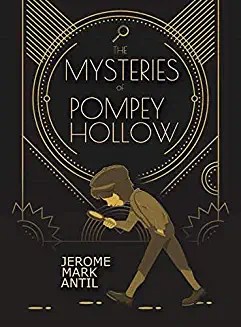
The Mysteries of Pompey Hollow is about a young boy, Jerry, who moves to the country just as the WWII he was born into and lived through had ended. In the country Jerry meets new friends – a passel of them – and they have adventures that would make Tom and Huck proud. The first edition of The Mysteries of Pompey Hollow (The Pompey Hollow Book Club – 2011) was named Book of the Year (Family and Friendship) by Books&Authors; Antil was also anointed a 20th century Mark Twain and the Norman Rockwell of the written word by book reviewers. Antil was named ‘Writer of the Year’ (2012) by Syracuse University’s student body for the historical fiction novel and for Antil’s promise to donate a book to a school for every book sold.

All this time the author thought the highlight of the novel was its historical value – fun stories with foundations in truth (appropriately stretched) of a group of kids growing up in the shadows of WWII in 1949. The 6th graders of 2018 saw the novel through a different set of eyes.

Paraphrasing most of the students opinions – “We loved the book – especially noting that nowhere in the tales was there ever a mention of a race or a nationality. Not once.” A majority of the readers pointing out that this one element made the book a winner – and a book that should be required reading by any age for stamping out racism.

Is there a 6th graders of 2018 moral? Simply this…if media and people in general would just stop using race as a reference to a person’s description – racism just might fade away.

Reprinted from BROADWAY WORLD

Antil Launches One More Last Dance Cajun Style

The party celebrated the memory of the past hotel residents and frequenters – Tennessee Williams (Streetcar named Desire) and Breakfast at Tiffany’s own Truman Capote. Many good things have been written in that hotel. Antil’s next novel was started in its guest room – and he’ll be back for more. In thanks for his good fortune, starting with Christmas in 2017 – Little York Books is shipping cases of Jerry Antil written books to every VA hospital in the country. Louisiana, Tennessee, Rhode Island, Kentucky and New York were the first. “The veterans in those hospitals,” said Antil, “are the unsung heroes of this nation. My books, by the caseload, will reach them all as my gift of appreciation for their sacrifice.”

Two unlikely men, one a dying, aging army captain – the other an illiterate French Cajun lawn boy – meet in Carencro, Louisiana. All the old man wanted was to see a jazz festival before he dies. His knew friend obliges him – and they leave the hospice on foot. An incredible journey unfolds.